
Cooked on Caramel Cake
This recipe is from the late 19th century. The cake is so unique and delicious, and I really wish I could talk to Nona about where this recipe came from. Y’all know I like to get straight to the recipe, but this one has so much hidden history that I wanted to give it a little more attention. So, if you want to read more about this cake, scroll below the recipe and you’ll find more.

Cooked on Caramel Cake
A late 19th century, warm, moist cake with a crisp outer meringue shell that is full of fall spices. Perfect with a cup of warm cider by the fire.
Ingredients
- 1½ cup Flour
- 2½ tsp Baking Powder
- ½ tsp each cloves, cinnamon, allspice
- 1 cup brown sugar
- 1/2 cup Crisco (I used butter)
- 1/2 cup milk
- ½ tsp vanilla
- 2 Egg Yolks
- 2 Egg Whites
- 3/4 cup brown sugar
- 3/4 cup Chopped Nuts
- Dash of salt
Instructions
- Sift together flour, baking powder, cloves, cinnamon, and allspice
- Cream in Crisco (or butter) and brown sugar.
- Beat in egg yolks.
- Add milk alternately with the flour mixture.
- Add vanilla
- Spread in an oiled 13x9 pan.
- For the Icing: Beat egg whites until stiff then add 1/2 the brown sugar. Beat well. Add remaining sugar and salt. Spread over the batter then sprinkle with nuts.
- Bake at 350° for 15-20 minutes.
- Serve warm with whipped cream.
- Nona's original recipe says "This cake will fall." I baked mine for 23 minutes because this warning scared me. Next time, I will bake it 18-20 minutes to prevent some of the dryness along the outside edges.
Notes
I used fresh-milled einkorn flour cup for cup according to the recipe.
I did not use nuts in the icing due to an allergy. Also, I used butter rather than Crisco.
The baking time is not listed on the recipe (thanks Nona, lol), but I baked for about 23 minutes. I think I'd try 18-20 minutes next time. The toothpick test will crack the outer shell.
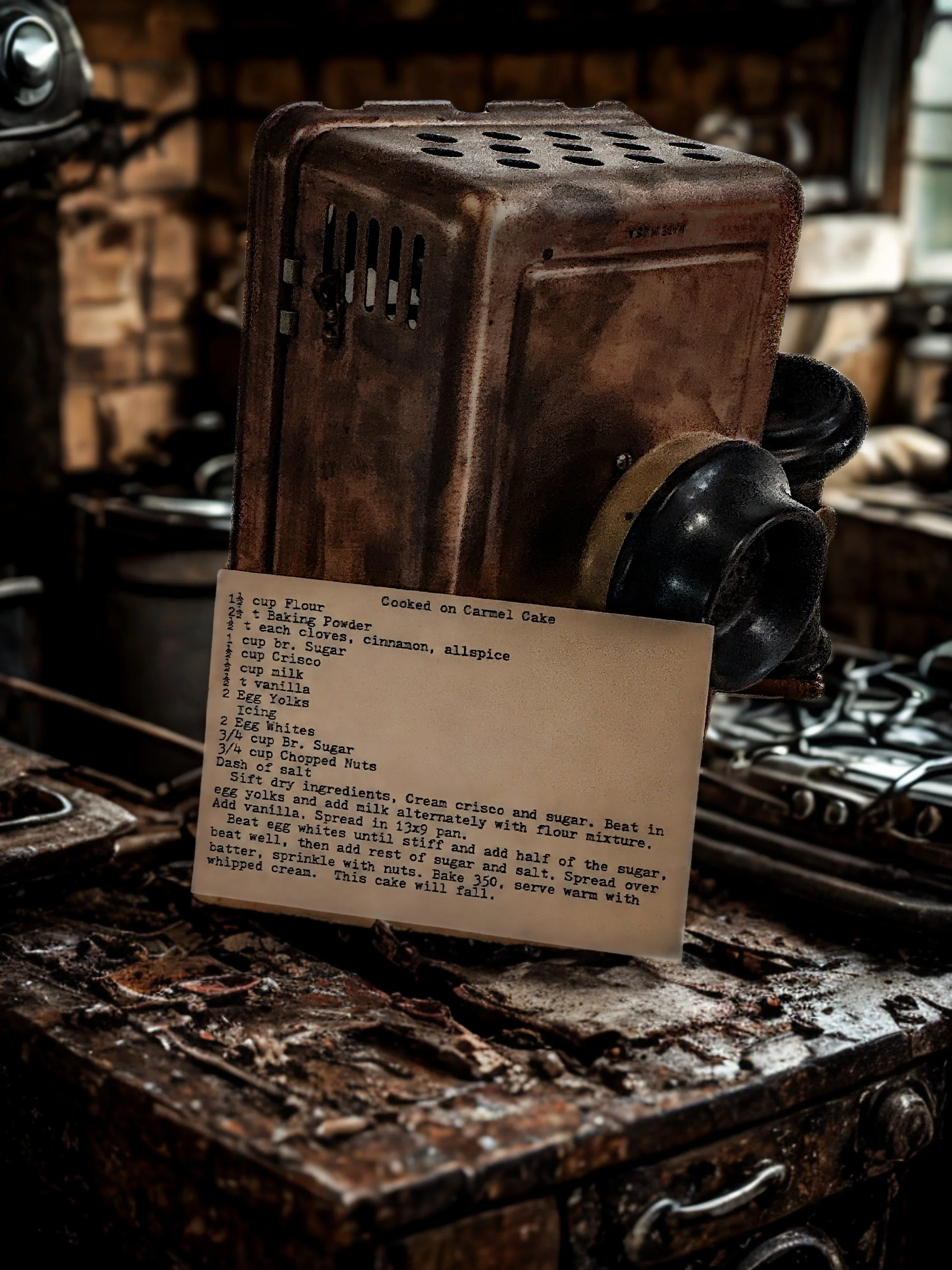
Nona isn’t here for me to ask exactly where this recipe came from, but the way it’s written gives me some clues.
The title “Cooked on Carmel Cake”: Caramel cakes and “burnt sugar” cakes became popular in the late 19th century in the south. My grandmother was born and raised on a farm in west Texas, and her mother taught her a lot about cooking. While the title suggests this would be a typical southern caramel cake recipe, the recipe doesn’t resemble any of the others I’ve found online.
Ingredients: Nona was born in the 20’s, so by the time she was keeping house and raising my dad, war rations were in full swing. Brown sugar was easier to find and less expensive than white sugar in the late 19th century. Also, white sugar, milk, and butter were rationed during WWI and WWII which makes the use of brown sugar and Crisco in this recipe stand out. Spices were often used to give baked good more flavor due to the heavy rationing of milk and butter.
The icing is where things get interesting. It is an egg white base and baked on like a meringue. This resembles Depression era cakes rather than the traditional southern caramel cakes. You also don’t find cloves and allspice in many caramel cake recipes. However, in early Moravian settlements in Texas, you would find desserts with slow-baked meringue as well as the use of those lovely fall spices, and the desserts were usually served with whipped cream. Why do I bring this up? Because my grandfather grew up in a Czech settlement in south Texas. The recipe is typed, a hallmark of my grandfather due to his shaky hands and resultant disheveled handwriting. “Caramel” is also misspelled; which yes, could be a typo, or it could also be because my grandfather grew up speaking Czech, had limited schooling, and his parents spoke no English.
So, is this recipe a southern caramel cake that was modified heavily because of the depression and war rations? Or, is it a southern caramel cake with Moravian influences that was modified to accommodate financial strain and war rations? I can’t answer those questions, but I do know this recipe is family. It tastes amazing, it was easy to make, and the outer shell is delicious and unique. This cake was fun to make and even more fun to research. I hope you give it a try!